


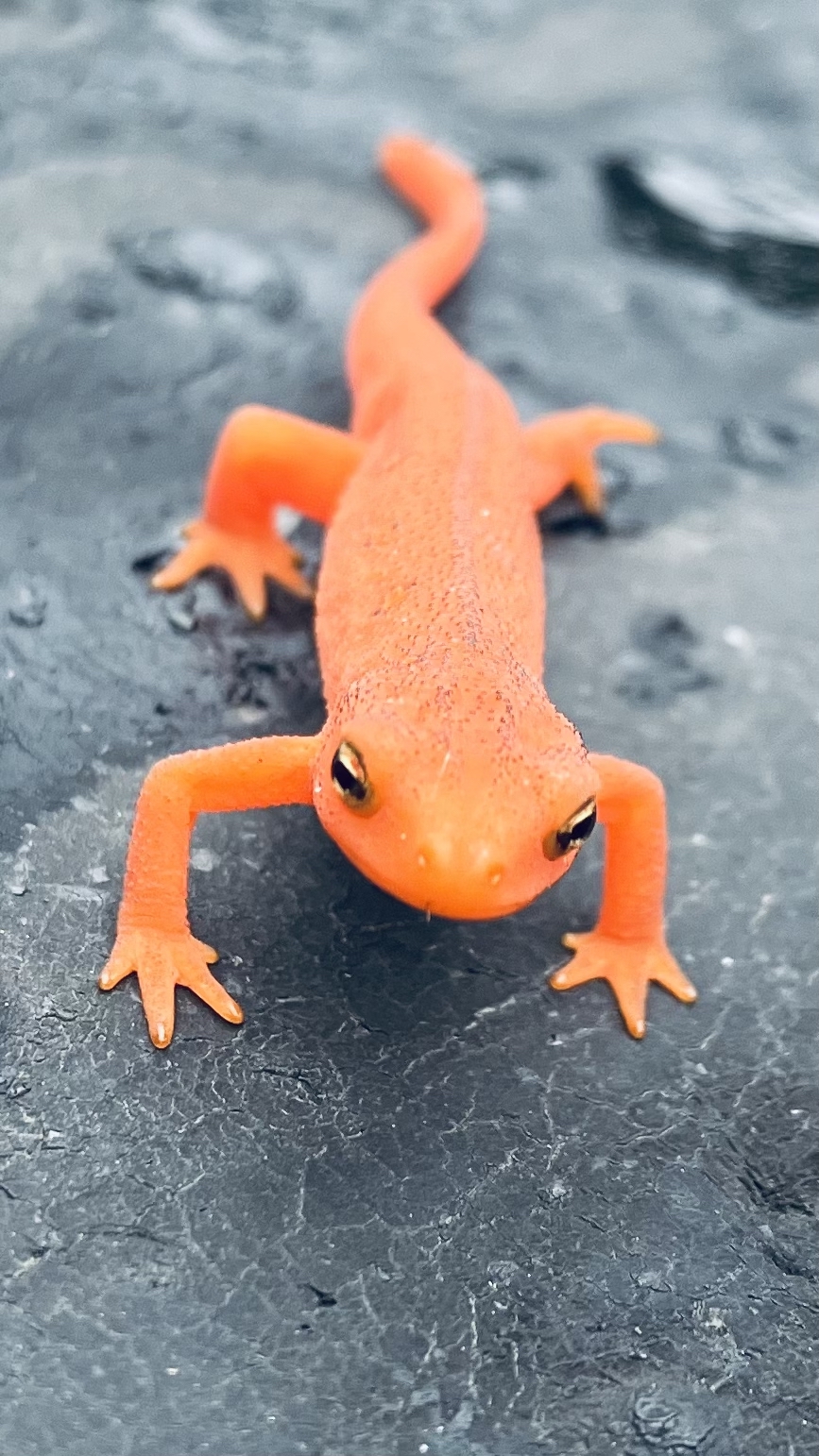
While some people dedicate themselves to a single field or discipline, we find power and impact in working at the intersection of science, art, and communications. It turns out the richness that occurs where systems meet has deep roots in the field of ecology itself.
The places where two habitats come together, like the edge of a forest and a field, often house more species than either one alone. Scientists refer to this as the “edge effect.” These ecotones attract animals from the forest and the field, plus others that are specially adapted to the conditions of the edge. The Indigo bunting is a stunning ambassador for forest-field edges in New England. You may have witnessed them using tall trees as singing perches and then dropping into fields to forage.
The shrubby green ribbon where rivers meet land offers another example of the edge effect. If you canoe with binoculars you know you’re likely to find an abundance of birds and the occasional mammal seeking cover and food in these riparian zones. The alder, red osier dogwood and other plants that thrive in these buffer strips don’t just house a wealth of species. They do the quiet but important work of holding back floodwaters and filtering runoff that would otherwise pollute our rivers.
At the coast, we find more evidence of the edge effect. Estuaries, the blue-green transition zone where fresh and salt water meet, are among the most productive ecosystems on Earth. Picture a heron working the tide flat and baitfish churning in the shallows. There’s more life packed into the shift between fresh and salt than in either ecosystem alone. These nutrient-rich waters serve as nurseries for fish that populate coastal waters far beyond the estuary itself.
Plants and animals are not the only organisms that flourish where systems meet, it turns out we do, too. According to prospect and refuge theory, we feel most at ease in environments that combine expansive views with protective shelter. Think about where you would pitch your tent. If you’re like us, you’d place it with an open view from the entry and the cover of the woods to your back.
Like the Indigo bunting, we do our best work at the boundary of distinctly different systems. Science feeds our curiosity about the natural world. Art gives that wonder a shape that resonates. Communications reaches people where they are and inspires them to take action in their own communities.
Where systems meet, life thrives.
WILDCURRENT field notebook